Japan Autumn Itinerary: 7 Days in Tokyo, Kyoto and Osaka for Peak Fall Foliage
There is a short, magical window each year when Japan trades its summer greens for gold ginkgo avenues and hillsides of crimson maples. If you time it right, you can follow that color through three of the country’s greatest cities in a single week. This 7-day Japan autumn itinerary links Tokyo, Kyoto and Osaka in mid-to-late November — the period when all three cities are typically at, or very near, their best.
First, Understand How Autumn Color Moves in Japan
Japan’s fall foliage season — called koyo — works like a slow wave. Color starts in the northern mountains in early autumn and travels south and downhill over the following weeks. That geography is your planning superpower:
- Mountains turn first. Higher elevations such as Mt. Takao, near Tokyo, usually peak noticeably earlier than the cities below them.
- Big cities peak late. Tokyo and Kyoto typically reach their best around mid-to-late November, sometimes sliding into early December in a mild year.
- Ginkgo and maple peak at slightly different times. Golden ginkgo avenues often look their best a little before the deepest red maples, so a mid-to-late November trip usually catches both.
Weather shifts the dates every year, so check the official autumn color forecasts (published by the Japan Meteorological Corporation and shared by japan-guide.com) as your trip gets close, and keep your day plans flexible enough to swap a Kyoto temple day with an Osaka day if one city is peaking ahead of the other.
The Route at a Glance
- Days 1–2: Tokyo — ginkgo avenues, garden maples, one mountain day option
- Day 3: Tokyo → Kyoto by shinkansen; first evening in the old town
- Days 4–5: Kyoto — the great maple temples, Arashiyama, Fushimi Inari
- Day 6: Osaka — castle park color and a food-filled night
- Day 7: Osaka at an easy pace, or a half-day hop to Nara, then depart
Days 1–2: Tokyo in Gold and Red
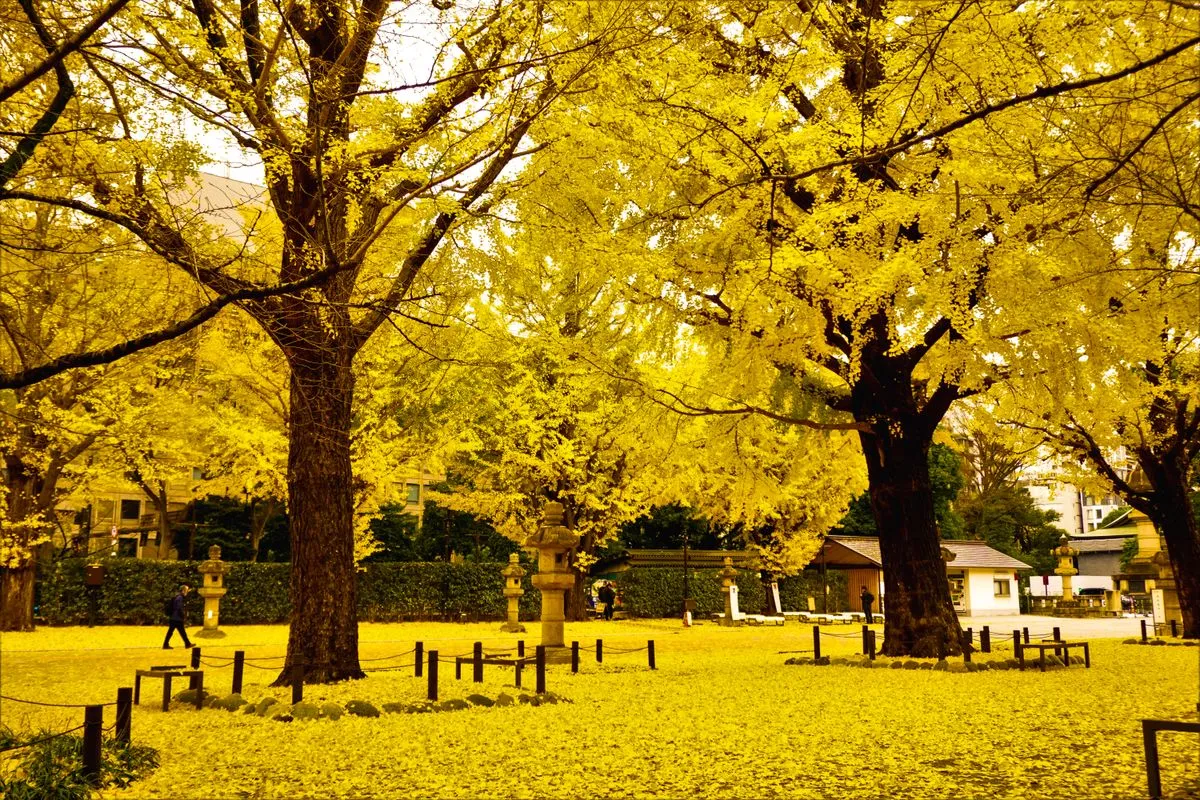
Tokyo’s autumn is a tale of two trees. The ginkgo (icho) paints whole boulevards yellow, while Japanese maples light up the city’s traditional gardens in red.
Day 1 — Ginkgo avenues and classic gardens
Start at the Meiji Jingu Gaien ginkgo avenue, the city’s most famous fall walk: rows of towering ginkgo trees forming a golden corridor. From there, head to Shinjuku Gyoen, a spacious park blending Japanese, English and French garden styles, where maples and ginkgo share the lawns. Finish at Rikugien, a classic Edo-period landscape garden famed for its maples — in peak season it is often illuminated after dark, when the reflected reds in the pond are unforgettable.
Day 2 — Old Tokyo, or a mountain of maples
Spend the morning in Asakusa — Senso-ji Temple and its Nakamise shopping street — then drift to Ueno Park, where museum fronts and temple paths are framed by fall color. If the city color is still building and you want a guaranteed show, swap this day for Mt. Takao, about an hour from Shinjuku by train. Its cable car, hiking trails and summit views peak earlier than central Tokyo, and the mountain is a beloved local koyo outing.
Day 3: Tokyo → Kyoto
Ride the shinkansen west — on a clear day, sit on the right-hand side for a chance of Mt. Fuji views. Send your suitcases ahead with a luggage-forwarding service from your Tokyo hotel so you can travel light.
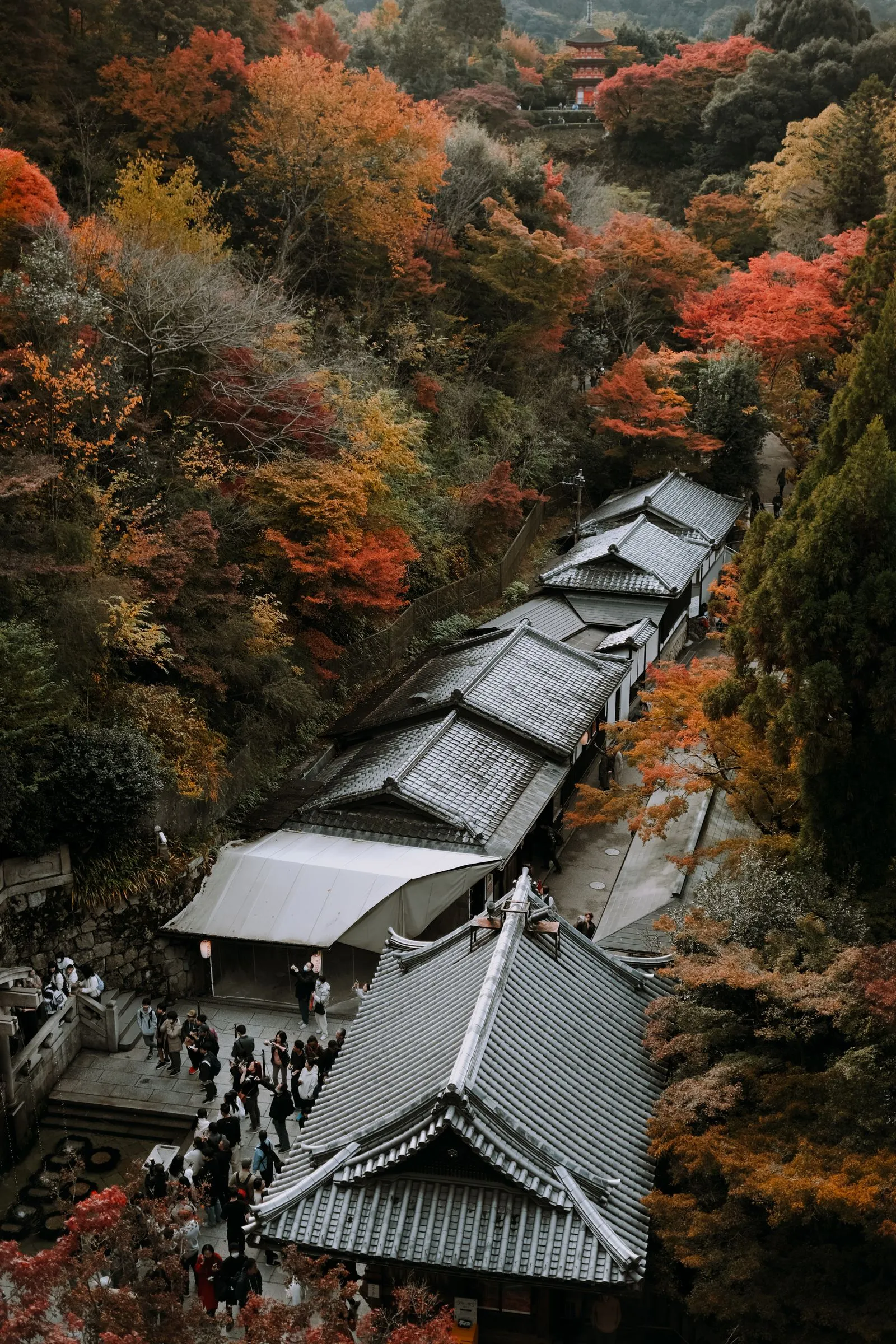
Arrive in Kyoto by early afternoon, drop your day bag, and walk the preserved lanes of Higashiyama: Ninenzaka and Sannenzaka, the Yasaka Pagoda viewpoint, and up to Kiyomizu-dera for sunset over the maple-filled valley below its wooden stage. Many Kyoto temples run special evening illuminations in peak season — Kiyomizu-dera and Kodai-ji are two of the most atmospheric.
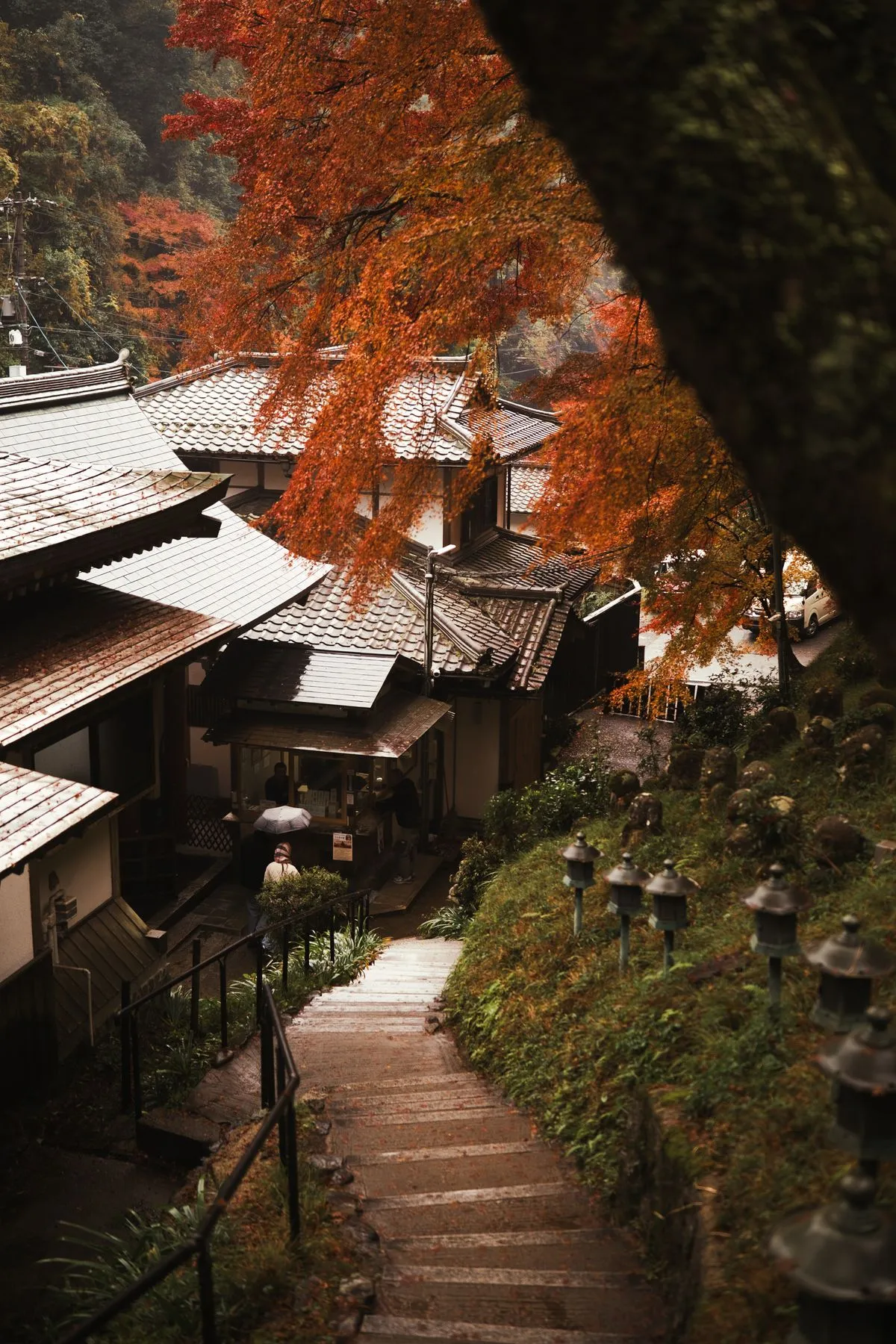
Days 4–5: Kyoto, the Capital of Maple Season
Kyoto is where Japan’s autumn reputation was earned. Two full days let you see both its blockbuster temples and its quieter corners.
Day 4 — The eastern temple belt
Begin early at Tofuku-ji, whose maple-filled ravine and checkerboard moss garden are autumn legends, then continue to Eikando (Zenrin-ji), arguably the city’s most celebrated maple temple, where crimson trees reflect in the Hojo Pond. Walk the Philosopher’s Path north toward Nanzen-ji, with its brick aqueduct and rich fall color, and end the day in Gion, watching for geiko and maiko at dusk along Hanamikoji Street.
Day 5 — Arashiyama and Fushimi Inari
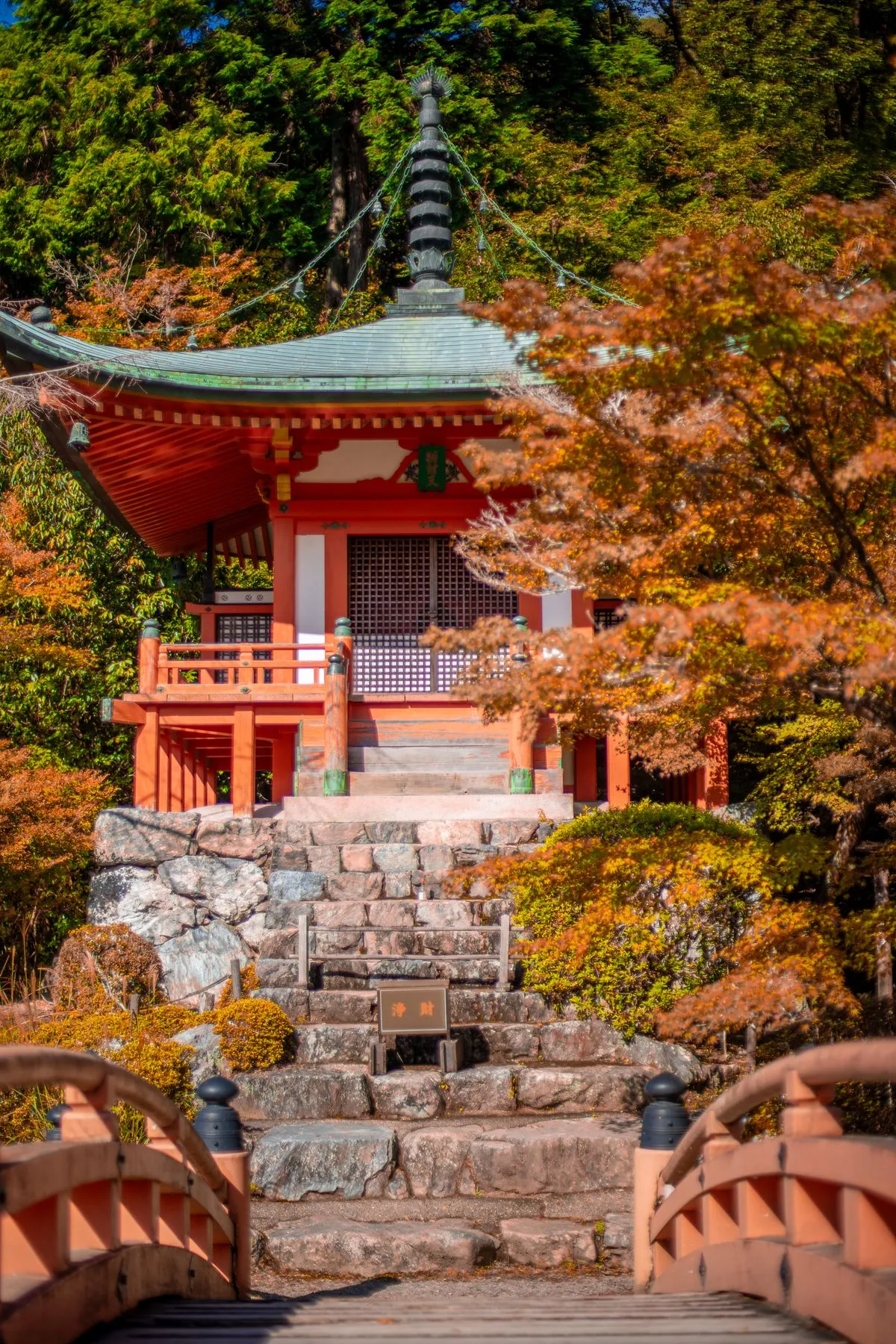
Go to Fushimi Inari Taisha first thing — its thousands of vermilion torii gates are loveliest (and quietest) in the early morning, and the forested mountain trails carry pockets of maple color. You don’t need to hike the whole mountain; even the first loop is rewarding.
Then cross the city to Arashiyama: the Bamboo Grove, the garden of Tenryu-ji (a World Heritage Site whose landscape garden borrows the maple slopes behind it), Togetsukyo Bridge over the Katsura River, and the peaceful garden of the Okochi Sanso villa. In the evening, consider Daigo-ji on another day or Kitano Tenmangu’s maple garden if your legs hold out — Kyoto rewards those who keep one slot unplanned.
Day 6: Osaka — Castle Maples and Neon Nights
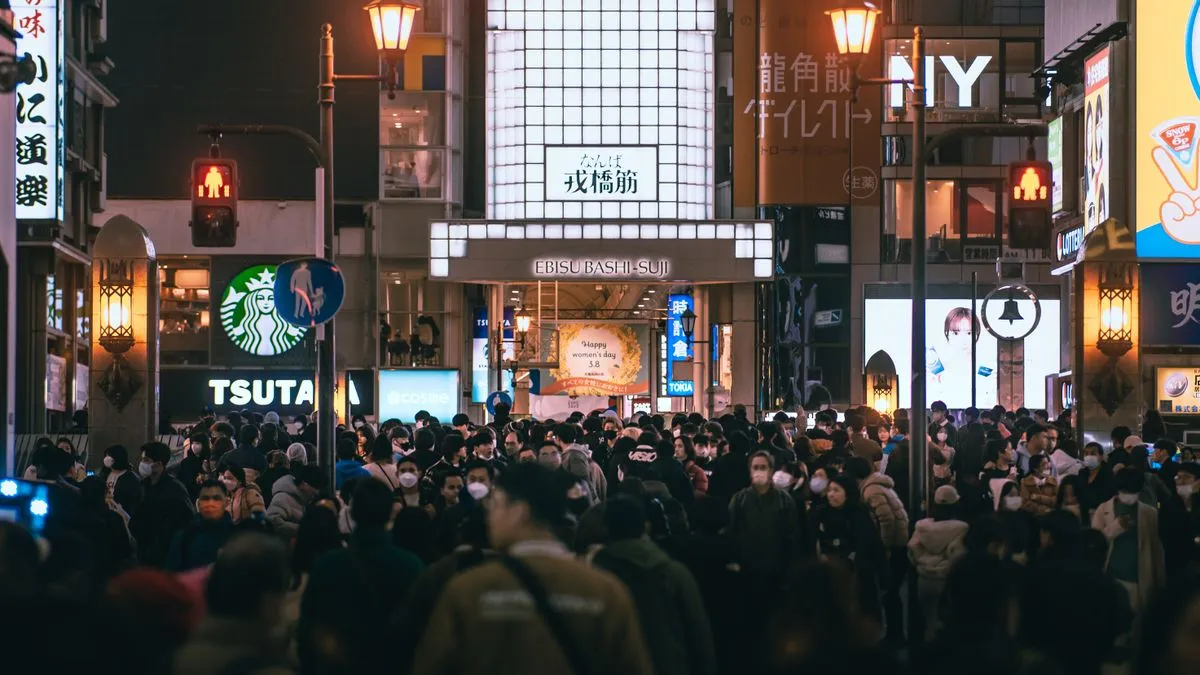
Osaka is a short train ride from Kyoto, so base yourself here for the last two nights or simply day-trip — staying over is easier. Start at Osaka Castle Park, where the castle keep rises above ginkgo and maple plantings and wide lawns made for a picnic. For a deeper nature fix, Minoo Park (Minoh), about half an hour north, walks you along a forested valley to a waterfall framed by some of the Kansai region’s best maples.
As darkness falls, trade foliage for food: Dotonbori, where the canal-side neon, takoyaki stands, kushikatsu counters and ramen shops deliver Osaka’s famous kuidaore spirit — “eat until you drop.”
Day 7: A Slow Finish (or Nara)
Keep the last day loose. Browse the kitchenware street near Namba, hunt for souvenirs in Shinsaibashi, or take the short train to Nara, where friendly deer roam a park glowing with autumn color around Todai-ji’s Great Buddha Hall. Osaka is also the natural departure point — Kansai International Airport is a direct train ride away.
Practical Tips for This Itinerary
- Book early. Mid-to-late November is peak season; hotels in Kyoto especially fill fast and prices climb.
- Start temples early. Arrive at headline temples near opening time — by mid-morning the famous maple spots are shoulder to shoulder.
- Prefer weekdays. Kyoto’s top temples are noticeably calmer Tuesday to Friday.
- Use an IC card. A Suica, Pasmo or Icoca makes the constant train-hopping between the three cities effortless.
- Reserve shinkansen seats in busy periods, and use luggage forwarding between hotels to keep travel days light.
- Dress in layers. November days can be mild, but temple gardens at 8 a.m. and evening illuminations are properly chilly.
- Chase the forecast, not the plan. If Kyoto peaks late, flip Days 4–5 with Osaka — the cities are close enough that the route flexes easily.
Seven days, three cities, and one rolling wave of gold and crimson — time it for mid-to-late November and Japan’s autumn will do the rest.
All photos in this article are from Pexels; photographers are credited under each image and in the credits list below.
Photo credits
- Bapak Moto — Pexels
- Maheshwaran Shanmugam — Pexels
- Eugenio Felix — Pexels
- Sachith Ravishka Kodikara — Pexels
- M Adriyawan — Pexels